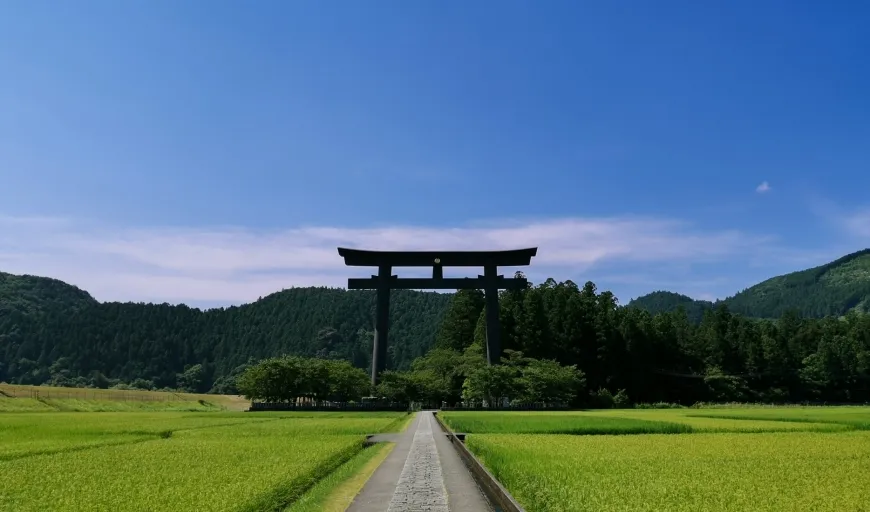
Shinto, meaning “the way of the gods,” is the native religion of the Japanese and has existed as long as Japan has. It continues to be one of the primary religions in Japan, alongside Buddhism.
Shinto in brief
Shinto lacks a specific founder and does not possess sacred texts like the sutras or the Bible. Additionally, propaganda and preaching are rare, as Shinto is deeply intertwined with Japanese culture and traditions.
The deities in Shinto are referred to as kami. These are revered spirits that embody significant elements and concepts of life, including wind, rain, mountains, trees, rivers, and fertility. After death, humans are honored as ancestral kami by their families. The kami of remarkable individuals may even be enshrined in certain shrines. Among them, the Sun Goddess Amaterasu is regarded as the most important kami in Shinto.
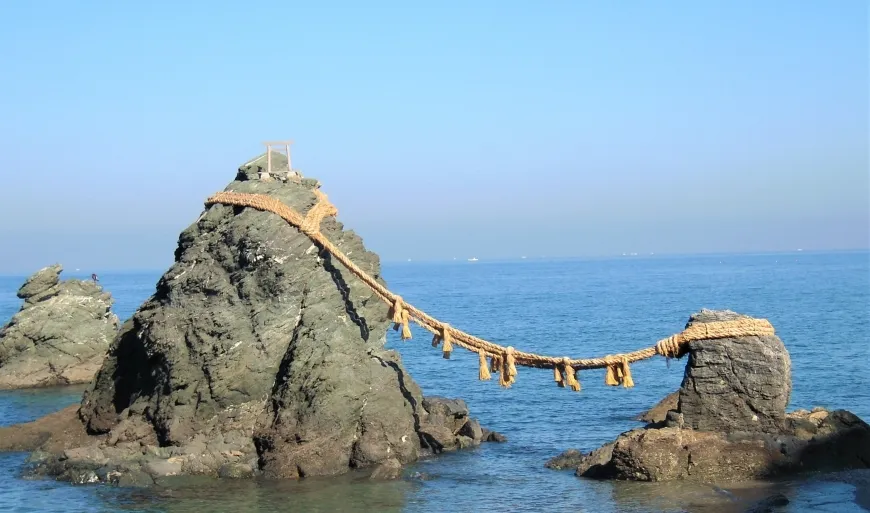
Various gods reside in all natural objects, including like rocks
Unlike many monotheistic religions, Shinto does not adhere to absolute truths. There is no definitive concept of right and wrong, and perfection is not expected of anyone. Shinto is a hopeful belief system, viewing humans as inherently good, with evil attributed to malevolent spirits. As a result, the main aim of Shinto rituals is to ward off these evil spirits through purification, prayers, and offerings to the kami.
Shinto shrines serve as places of worship and as the abodes of kami. Many shrines host festivals (matsuri) regularly to connect the kami with the outside world. Shinto priests conduct rituals and typically reside on the shrine premises. Both men and women can serve as priests, and they are permitted to marry and have families. During rituals and shrine activities, priests are assisted by younger women known as miko, who wear white kimonos, must be unmarried, and are often the daughters of the priests.
Key aspects of Shinto art include the architecture of shrines and the preservation of traditional art forms such as Noh theater, calligraphy, and court music (gagaku), which originated in the courts of Tang China (618-907).
Shinto’s History
Buddhism was introduced in the 6th century, leading to some early conflicts, but the two religions quickly learned to coexist and even enhance one another by viewing kami as manifestations of Buddha.
During the Meiji Period, Shinto was established as Japan’s official religion, with Shinto priests becoming government officials, significant shrines receiving state funding, and Japan’s creation myths being utilized to promote a national identity centered around the Emperor.
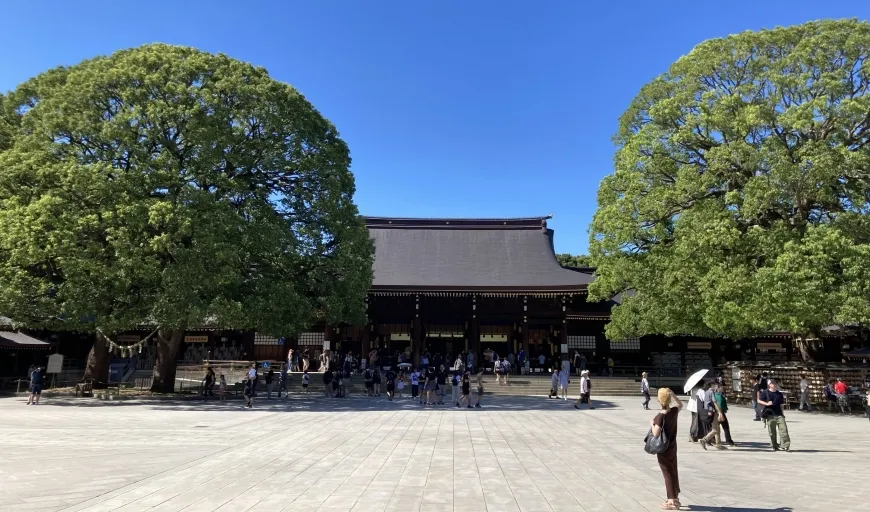
Meiji Shrine is the symbol of worship to Shinto and Emperor
Additionally, there were attempts to separate and liberate Shinto from Buddhism. Following World War II, Shinto and the state were separated.
Shinto in Daily life
Individuals turn to Shinto for assistance by praying at home altars or visiting shrines. Shrines offer a variety of amulets for purposes such as traffic safety, health, business success, safe childbirth, and good exam results, among others.
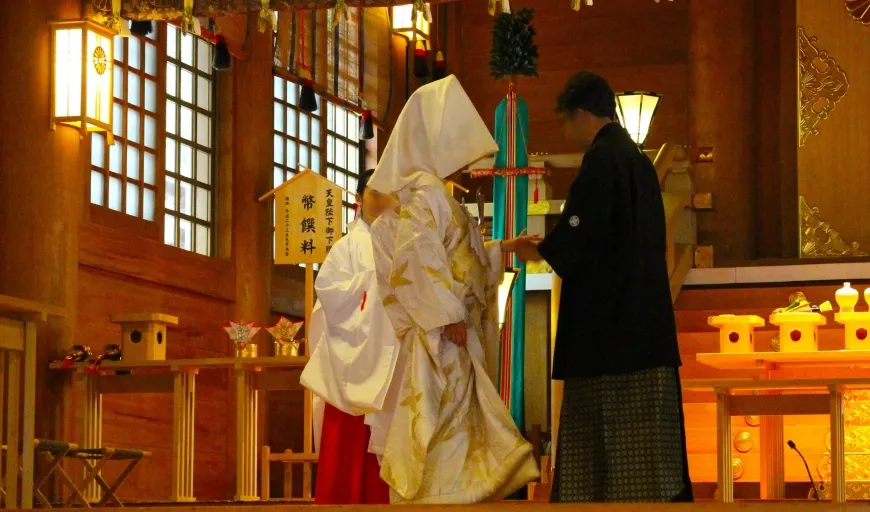
Beautiful Shinto-style wedding ceremony
Shinto-style wedding ceremonies are quite common. In contrast, death is viewed as a source of impurity and is primarily addressed by Buddhism. As a result, there are almost no Shinto cemeteries, and most funerals are conducted in the Buddhist tradition.