I recently participated in the Meiji Jingu Shinto Culture Walking 1 Day Tour, a shrine that has long captivated my interest.
This tour was more than just sightseeing; it was an emotionally moving experience that “opened the door to mystery” and deepened my understanding of Shinto, the core of Japanese spiritual culture.
Thanks to our excellent guide, I began to grasp the teachings of Shinto, which had always seemed mysterious to me, and the profound connection between Shinto shrines and Shinto itself, becoming clearer with each explanation.
This experience report is about the wonderful guided tour “Meiji Jingu Shrine and Shinto Culture Walking 1 Day Tour”. Please read this experience report for your next trip!
CHECK AVAILABILITY OF THIS TOUR
- The Meiji Jingu Tour: Its Charms and a Deep Dive into Japanese Spirituality
- Meiji Jingu Tour: Majestic Beauty and History Intertwined – The Harmony of Architecture and Nature!
- Meiji Jingu Tour: A Journey into the Heart of Shinto – The Profound Connection Between Shrines and Faith
- Meiji Jingu Tour: An Emotional Experience Forged by Knowledge and Passion
- Meiji Jingu Tour: A Memorable Experience of Japanese Spiritual Culture
The Meiji Jingu Tour: Its Charms and a Deep Dive into Japanese Spirituality
Meiji Jingu is one of Japan’s most prominent shrines, dedicated to Emperor Meiji and Empress Shoken.
Upon entering its vast grounds, I was immediately overwhelmed by its solemn atmosphere. A deep forest, seemingly making one forget the hustle and bustle of the city, stretched out before me.
With every step, I felt my mind settle and become purified.
This sacred space was not only beautiful but also conveyed the weight of history and the prayers of countless people.
Meiji Jingu Tour: Majestic Beauty and History Intertwined – The Harmony of Architecture and Nature!
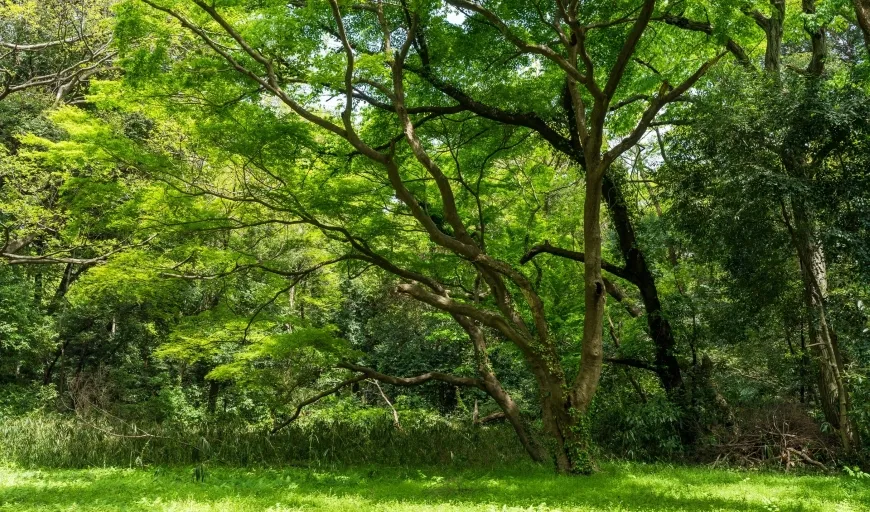
An artificial forest that feels completely like untouched nature
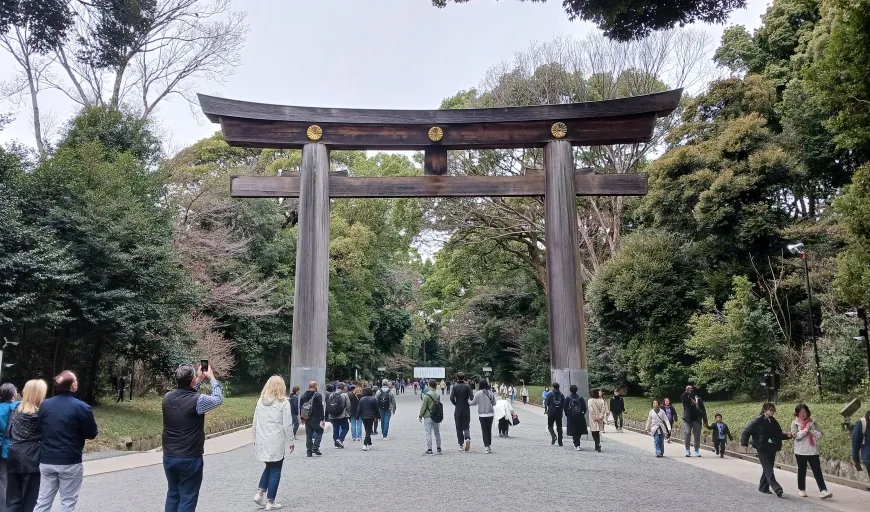
The tour began by passing through a massive Torii gate. The Torii acts as a boundary separating the sacred realm from the secular world, and stepping through it naturally made me feel a sense of solemnity.
As we proceeded along the approach (Sando), the scent of trees filled the air, enveloping us in a silence so profound it was easy to forget we were in the heart of the city. This Sando itself felt like a crucial “path” for purifying the soul.
Our guide explained not only the historical background of Meiji Jingu, which began construction in 1915 and was consecrated in 1920, but also that the forest was an artificial one, created from 100,000 trees donated from all over Japan.
This “eternal forest” was born from deep respect and cooperation, and I was deeply moved by its grand scale and the beauty created by the harmony between nature and humanity.
The revelation that this forest was intentionally designed not merely as a landscape but as an integral part of the sacred space suggested a profound meaning rooted in Japanese views on nature and faith.
What particularly impressed me was the “Masugata” on the Sando. This structure causes the approach to make a sharp right turn, and our guide explained that this sudden change in direction was meant to ward off evil spirits and purify the mind of worshippers. I was truly amazed by how deeply Shinto thought was embedded in every detail.
As we passed through the Minami Shinmon (South Shrine Gate) and approached the Main Hall (Honden), I felt a heightened sense of reverence and sanctity. The architectural style of the Main Hall was a testament to traditional Japanese aesthetics and intricate craftsmanship, and its presence commanded awe.
Meiji Jingu Tour: A Journey into the Heart of Shinto – The Profound Connection Between Shrines and Faith

The main hall of Meiji Shrine
The most valuable aspect of this tour was the detailed explanation of Shinto provided by our guide.
Up until now, Shinto had always been somewhat ambiguous and mysterious to me. However, the guide clearly explained core concepts such as “Yaoyorozu no Kami” (eight million gods), coexistence with nature, and reverence for ancestors, making them much more understandable. I learned that Shinto does not have a specific founder or rigid doctrines, but rather developed organically from the climate and daily lives of the Japanese people.
Furthermore, Shinto shrines are places where these gods are believed to reside, serving as crucial venues for people to offer prayers and express gratitude.
The guide also taught us the meaning behind each action, such as the etiquette at the temizuya (water purification font) and the significance of the “two bows, two claps, one bow” ritual during worship. This allowed me to view these actions not merely as rituals, but as a form of dialogue with the divine or an act of self-reflection.
It was particularly fascinating to learn that the benefits attributed to Meiji Jingu, such as marital harmony, family safety, peace, academic success, and matchmaking, stem from the deep bond between Emperor Meiji and Empress Shoken and their significant contributions to the nation.
This helped me understand how the historical background of the shrine is connected to the desires of people today. I truly felt that Shinto shrines are not just buildings, but deeply intertwined with people’s lives, serving as a spiritual anchor.
CHECK AVAILABILITY OF THIS TOUR
Meiji Jingu Tour: An Emotional Experience Forged by Knowledge and Passion
The success of this tour was undoubtedly due to our guide.
Her profound knowledge and passion for Shinto and Meiji Jingu were evident to all participants. She didn’t just list facts; she wove in interesting anecdotes about historical backgrounds and cultural meanings, keeping us thoroughly engaged and captivated.
She patiently answered all our questions and showed thoughtful consideration by adjusting her explanations to suit each participant’s level of understanding. For instance, she explained Shinto concepts using examples from everyday Japanese life, making them feel more relatable.
Thanks to her, I was able to appreciate not only the beauty of Meiji Jingu but also delve into its underlying spirituality and cultural depth, making this tour an unforgettable “learning” experience rather than just sightseeing.
At Meiji Jingu Gyoen (Meiji Jingu Garden), we experienced even deeper tranquility amidst the rich nature, including Kiyomasa’s Well and the Iris Garden.
The guide meticulously explained the significance of each spot and its seasonal beauty, providing an excellent opportunity to reaffirm Japan’s aesthetic sense of coexisting with nature.
Meiji Jingu Tour: A Memorable Experience of Japanese Spiritual Culture
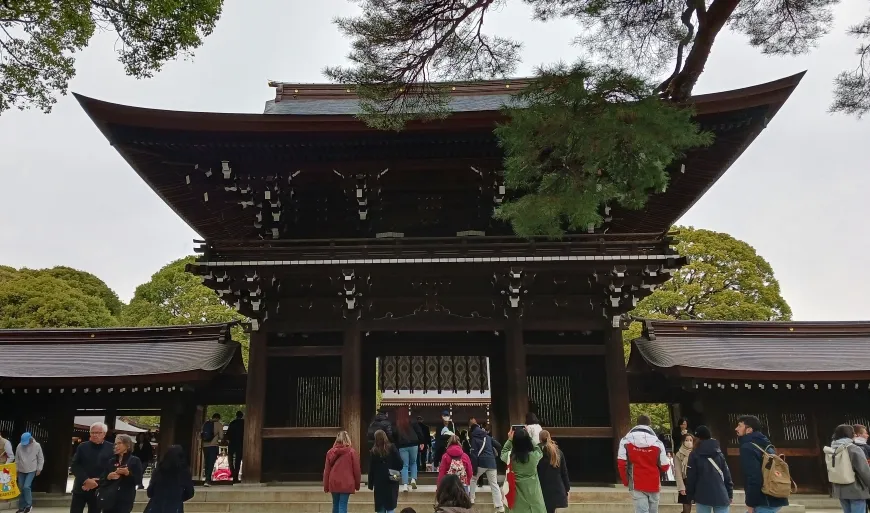
Meiji Jingu Minami Shinmon (South Gate)
This Meiji Jingu Shinto Culture Walking Tour was an incredibly meaningful experience for me.
I was deeply moved by the beautiful shrine, my understanding of the previously mysterious Shinto deepened, and above all, the encounter with our wonderful guide made this experience truly unforgettable.
I confidently recommend this tour to anyone interested in Japanese culture and spirituality.
By not merely observing but by delving into the historical background and philosophy through the explanations of a knowledgeable guide, you will gain a much richer travel experience.
Meiji Jingu Shinto Culture Walking 1 Day Tour offers a wonderful opportunity to refresh your mind and body in a serene sanctuary nestled within the bustle of Tokyo, allowing you to touch upon the profound essence of Japan.