Welcome to Japan, a land where centuries-old traditions seamlessly blend with cutting-edge modernity! One of the most enchanting aspects of Japanese culture is its emphasis on respect, harmony, and thoughtful consideration for others. While Japanese people are incredibly understanding of foreign visitors, making a small effort to understand and follow their customs will not only earn you respect but also significantly enrich your travel experience.
This guide will walk you through essential Japanese etiquette, from common courtesies to specific situations, ensuring you navigate the cultural landscape with confidence and grace.
- 1. The Golden Rule: No Tipping!
- 2. The Shoe Ritual: When and Where to Take Them Off
- 3. Public Transportation Etiquette: Smooth & Silent Journeys
- 4. Dining Etiquette: Savoring Japanese Cuisine Respectfully
- 5. Temple & Shrine Etiquette: Respectful Visits
- 6. Bathing Etiquette (Onsen & Sento): Stripping Down to Tradition
- 7. General Interactions & Courtesy
1. The Golden Rule: No Tipping!
This is perhaps the most crucial etiquette point for many foreign visitors, especially those from North America.
- Why it’s unique: In Japan, exceptional service is simply expected as part of the job and is included in the price.
- What happens if you try to tip: Offering a tip can actually be seen as confusing, insulting, or simply rude. Service staff might chase after you to return the money, thinking you’ve accidentally left it behind.
- Instead: A sincere “Arigato gozaimasu” (thank you very much) is the best way to show your appreciation for good service.
2. The Shoe Ritual: When and Where to Take Them Off
Taking off your shoes is a fundamental custom rooted in cleanliness and respect.
- When to take them off:
- At homes: Always remove your shoes at the entrance (genkan) of someone’s house.
- Traditional accommodations: Ryokans (traditional inns) and some guesthouses.
- Temples and shrines: Before entering certain halls or inner areas.
- Traditional restaurants: Especially those with tatami mat seating areas (you’ll see a raised floor or a clear indication).
- Some museums, traditional shops, or public facilities: Look for shoe lockers or racks near the entrance.
- Doctor’s offices/clinics.
- What to do with your shoes: Place them neatly together, pointing towards the door you entered.
- Slippers: Often, house slippers are provided. Use them indoors, but remember to swap them for special toilet slippers when entering the bathroom, and then swap back when you leave! Never wear house slippers outside or on tatami mats.
- Be prepared: Wear clean socks, as you’ll be walking around barefoot or in borrowed slippers.
3. Public Transportation Etiquette: Smooth & Silent Journeys
Japan’s trains and buses are incredibly efficient, and a large part of that comes from collective courtesy.
- Keep quiet: Avoid loud conversations, talking on your phone, or playing music without headphones. The atmosphere on trains is generally quiet and respectful.
- Queue neatly: Wait in line at designated spots on the platform for the train doors to open. Allow passengers to exit before boarding.
- Prioritize seats: Offer your seat to the elderly, pregnant women, people with disabilities, or those with small children. Look for “priority seating” areas (often marked in English).
- No eating/drinking (mostly): While acceptable on long-distance trains (like the Shinkansen) and express trains, eating or drinking on local trains and subways is generally frowned upon.
- Bags: Don’t put large bags on empty seats. If the train is crowded, hold your backpack in front of you or place it on the overhead rack.
- Escalators: In Tokyo, stand on the left and walk on the right. In Osaka, it’s the opposite – stand on the right, walk on the left. Just follow what the locals are doing!
4. Dining Etiquette: Savoring Japanese Cuisine Respectfully
Japanese dining has a few nuances that are easy to pick up.
- “Itadakimasu” & “Gochisousama Deshita”: Before eating, say “Itadakimasu” (いただきます), meaning “I humbly receive” (a thanks for the food and effort involved). After eating, say “Gochisousama deshita” (ごちそうさまでした), meaning “It was a feast” (a thanks to the chef and hosts).
- Chopsticks:
- Don’t stick them upright in your rice: This resembles an offering at a funeral.
- Don’t pass food from chopstick to chopstick: Another funeral ritual.
- Don’t point with them or wave them around.
- Use the resting stand: When not using them, place them on the provided chopstick rest.
- Reverse chopsticks: If serving communal food, use the blunt end of your chopsticks to pick up items.
- Slurping noodles: It’s generally acceptable, and even encouraged, to slurp ramen or soba/udon noodles. It signifies enjoyment and helps cool the hot noodles.
- Oshibori (Wet Towel): You’ll often be given a small wet towel (hot or cold). Use it to clean your hands before eating, then fold it neatly and set it aside. Don’t use it to wipe your face or neck.
- Pouring drinks: When drinking with others, it’s customary to pour drinks for each other rather than just for yourself.
- Sushi Etiquette: Eat sushi with your hands or chopsticks. Dip the fish side (not the rice side) into soy sauce sparingly. Avoid mixing wasabi into your soy sauce.
5. Temple & Shrine Etiquette: Respectful Visits
These are places of worship and spiritual significance.
- Before entering: At Shinto shrines, you’ll often find a water pavilion (temizuya) with ladles.
- Take a ladle and rinse your left hand.
- Rinse your right hand.
- Pour a small amount of water into your cupped left hand and rinse your mouth (spit the water discreetly beside the basin, not back into it).
- Rinse your left hand again.
- Rinse the ladle by letting remaining water run down the handle.
- Place the ladle back.
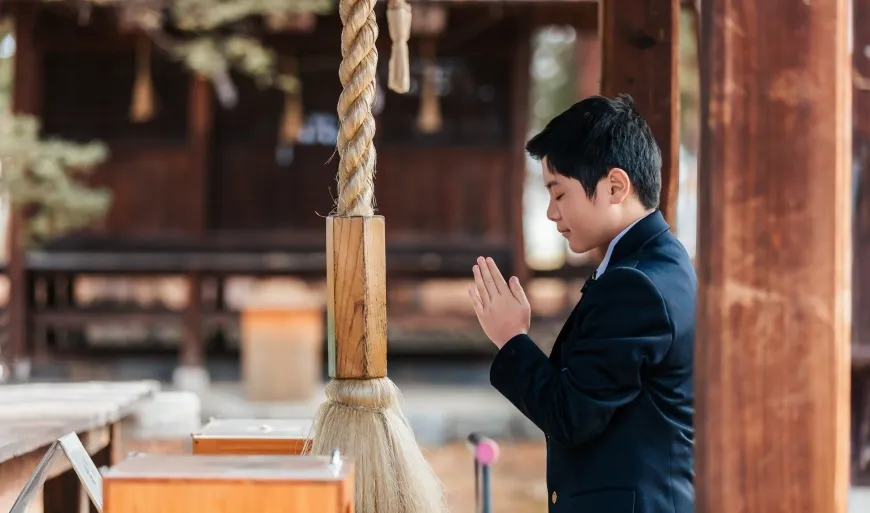
- Bowing: At shrines, approach the offering box, bow twice, clap twice, make your wish/prayer, and bow once more. At Buddhist temples, simply bow and offer a prayer.
- Photos: Generally allowed outside, but be respectful and avoid taking photos inside prayer halls where people are worshipping. Look for “no photography” signs.
- Dress respectfully: While no strict dress code, modest attire is always appreciated.
6. Bathing Etiquette (Onsen & Sento): Stripping Down to Tradition
Public baths (sento) and hot spring resorts (onsen) are a quintessential Japanese experience, but they have strict rules.
- Shower thoroughly BEFORE entering the bath: This is non-negotiable. Use the provided stools and showerheads to wash your entire body with soap and rinse thoroughly.
- No swimwear: You enter the baths completely naked. Segregated by gender.
- Towels: Bring a small hand towel (you’ll usually get one with your entry fee or stay). This towel can be used to scrub yourself and can be placed on your head while in the bath, but never let it touch the bathwater. Use a larger bath towel to dry off after you exit the bathing area, before returning to the changing room.
- Tattoos: Historically, tattoos were associated with yakuza and were often banned from public baths. While this rule is slowly changing (especially in tourist-heavy areas), many establishments still prohibit visible tattoos. Some might ask you to cover them with waterproof patches. It’s best to check in advance or choose tattoo-friendly onsen.
- Keep hair out of water: Tie up long hair.
7. General Interactions & Courtesy
- Bowing: A fundamental form of greeting and showing respect. A slight nod is usually sufficient, but observe how locals bow in various situations.
- “Sumimasen” (すみません): This versatile word means “excuse me,” “I’m sorry,” or “thank you.” Use it to get attention, apologize for a minor bump, or show appreciation.
- Personal space: Japanese people generally maintain a respectful distance. Avoid overly physical greetings like hugging or back-patting unless initiated by a Japanese friend.
- Pointing: Don’t point with a single finger; instead, use an open hand to gesture.
- Cash handling: When paying with cash, place money on the small tray provided at the counter, rather than directly into the cashier’s hand.
- Noise levels: Keep your voice down in public spaces, especially when talking on the phone.
While this list might seem extensive, remember that locals truly appreciate any effort you make. Don’t be afraid to ask if you’re unsure, and a polite smile goes a long way. Embracing these customs will not only make your trip smoother but also offer you a deeper, more meaningful connection with Japan’s rich culture. Enjoy your journey!